
Finding water in your basement after a heavy rainstorm is never something homeowners want to see. Even a small amount of water can damage flooring, drywall, insulation, and personal belongings if it isn’t dealt with quickly. More importantly, it can be a sign that water is finding its way through your home’s foundation.
In Alberta, periods of heavy rainfall can saturate the soil surrounding your home. As the ground becomes waterlogged, pressure builds against foundation walls and floors. If cracks or weak points are already present, water can begin making its way inside.
Make Sure It’s Safe First
Before you start cleaning up, make sure the basement is safe to enter. If water has reached electrical outlets, appliances, or your furnace, avoid entering until the power has been shut off.
Once it’s safe, remove any standing water as soon as possible. The faster you can dry the area, the less chance there is for mould growth and additional damage.
Find Out Where the Water Came From
The next step is figuring out how the water entered your basement. While some flooding is caused by plumbing problems, heavy rain often points to water entering from outside the home.
Take a slow walk around the basement and look carefully at the walls and floor. Water stains, damp concrete, or visible trickles can often help identify the source.
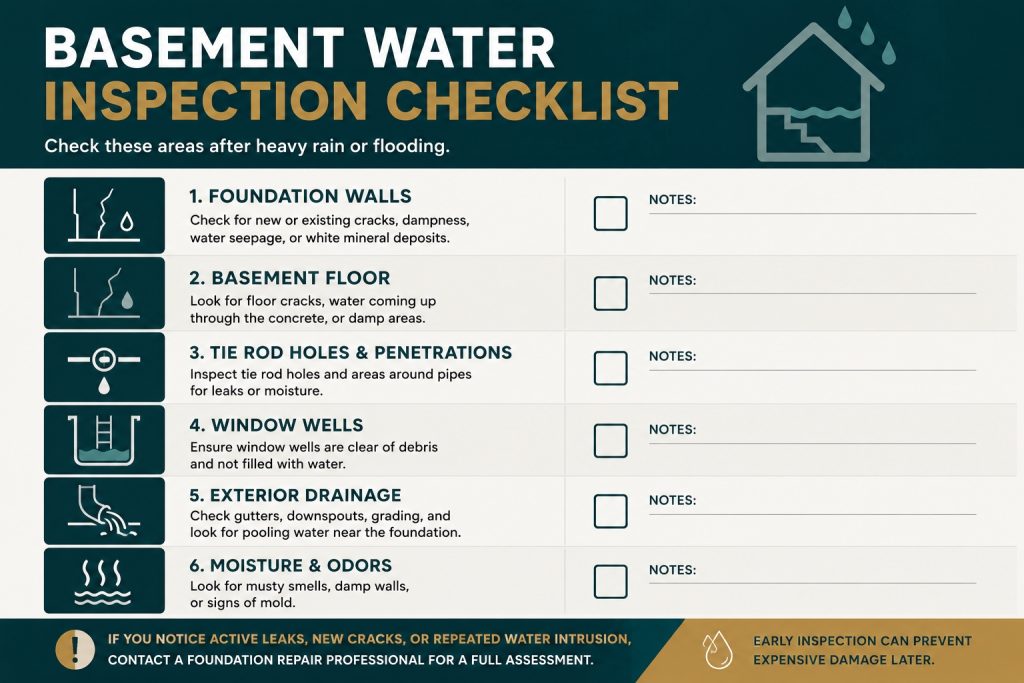
Inspect Your Foundation Walls
Foundation walls are one of the most common places for water to enter after heavy rainfall. Existing cracks that stay dry most of the year may suddenly begin leaking when the surrounding soil becomes saturated.
Look for new cracks, damp spots, white mineral deposits, or water actively seeping through the concrete. Even small vertical cracks can allow surprising amounts of water into your basement during a major storm.
Check the Basement Floor
Water doesn’t always come through the walls. In some cases, it enters through cracks in the basement floor or where the floor meets the foundation wall.
If you notice water bubbling up through the concrete or collecting along the edges of the room, it may indicate pressure building beneath the slab. This should be inspected before the problem becomes worse.
Don’t Forget to Look Outside
Many basement leaks actually start outside the home. Overflowing gutters, clogged downspouts, poor grading, or window wells filled with water can all increase the amount of moisture sitting against your foundation.
After the rain has stopped, take a walk around your property. Make sure downspouts are directing water away from the house and that water isn’t pooling next to the foundation.
Dry Everything Thoroughly
Cleaning up standing water is only part of the job. Moisture trapped behind walls, under flooring, or inside insulation can lead to mould and unpleasant odours if it isn’t dried properly.
Use fans and dehumidifiers for several days if necessary. If drywall or flooring has been heavily saturated, it may need to be removed to prevent further damage.
Don’t Ignore Foundation Cracks
It’s common for homeowners to clean up the water and hope it doesn’t happen again. Unfortunately, the crack that allowed water inside will usually continue to leak during future storms.
Over time, repeated water intrusion can cause additional deterioration and more expensive repairs. Addressing the source of the problem early is the best way to protect your home.
When Should You Call CrackPros?
If you’ve noticed water entering through a foundation wall, basement floor crack, or another opening in the concrete, it’s worth having your foundation professionally assessed. Even if the leak stops after the rain ends, the underlying problem is still there.
At CrackPros, we specialize in permanent foundation crack repairs, structural foundation repairs, leaking tie rod repairs, and basement floor crack repairs. We provide free estimates throughout the Edmonton area and back our work with transferable warranties, giving homeowners confidence that their repairs are built to last.
Protect Your Home Before the Next Storm
A flooded basement is often your home’s way of telling you something needs attention. Repairing foundation cracks before the next heavy rainfall can help prevent ongoing water damage and give you peace of mind when storm season arrives.
If your basement has leaked after recent rain, contact CrackPros for a free estimate. We’ll identify where the water is coming from and recommend a permanent repair that helps keep your basement dry for years to come.